
Fire Safety Week for Preschoolers: How to Teach Safety With Calm and Play
The smoke alarm chirps while dinner sizzles, and the little ones freeze, cover both ears. They ask, “Is something wrong?”
That moment is a teachable one, and a common one. Fire safety is a big topic for preschoolers, and wondering how to bring it up in a way that keeps them calm is a loving instinct shared by parents, grandparents, and educators everywhere. You are in good company.
This Fire Prevention Week, you will find five playful practices, each just five to ten minutes long, that turn safety into a game the children in your life will ask to play again.
Why Fire Safety Feels So Big to Little Ones
Loud beeps, flashing lights, and firefighters in masks and helmets add up to a lot for a young child to take in. After 30+ combined years in early childhood, we’ve seen the same pattern again and again: children absorb big topics best when those topics arrive with a clear plan and a little play.
Familiarity does the heavy lifting. NFPA’s Learn Not to Burn preschool lesson acknowledges that a firefighter’s gear can look and sound scary, and it helps children see firefighters as community helpers. Save the Children’s home fire tips suggest showing children what firefighters look and sound like in full gear before an emergency ever happens.
5 Playful Ways to Teach Fire Safety to Preschoolers
Keep each session short, five to ten minutes, and sprinkle them across the week. Little and often wins the day.
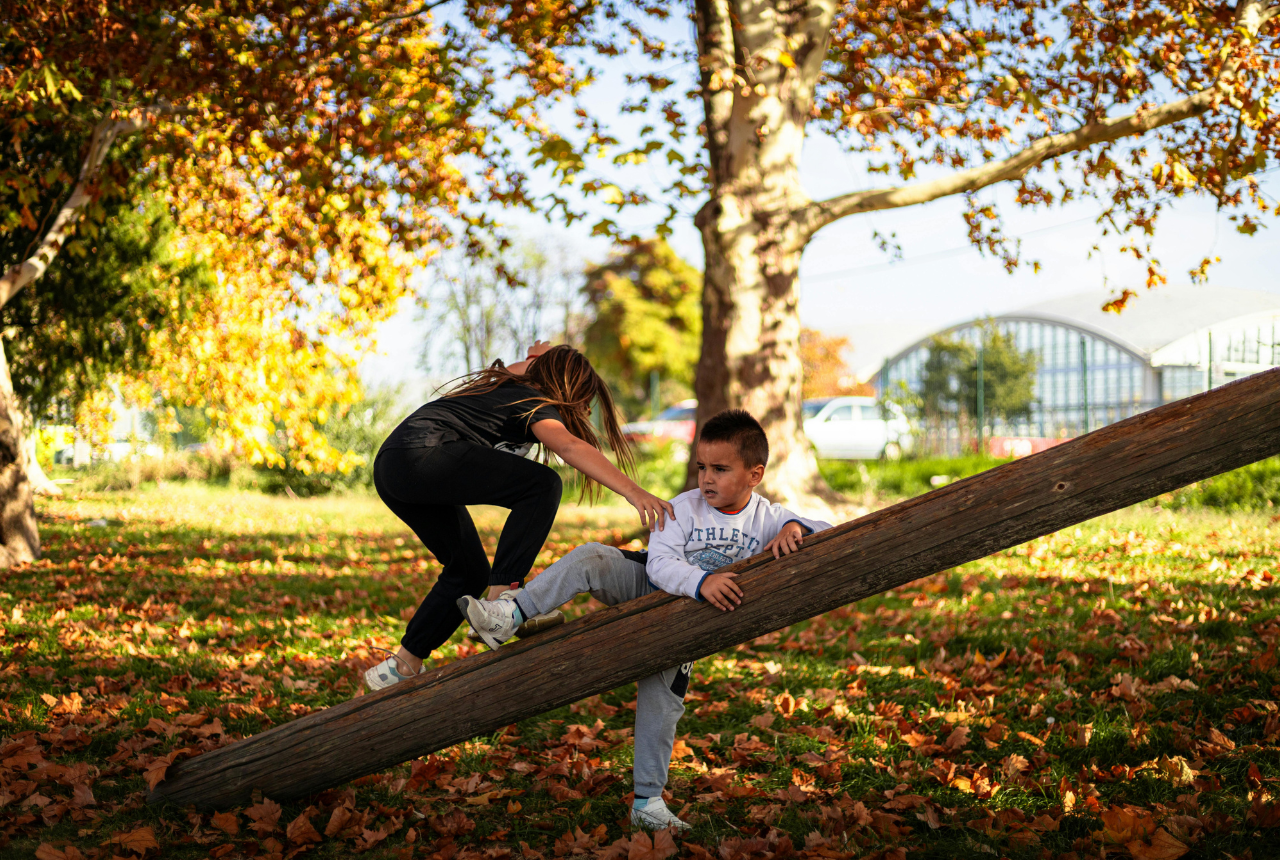
Strategy 1: Meet the Smoke Alarm and the Mighty Maple
That loud beep feels far friendlier once it becomes a familiar sound. Press the test button together while little ones cover their ears, then name what the sound means.
What to say: “That sound is our signal to go outside with a grown-up.”
Next, pick one easy-to-find spot outside, like a big tree, the mailbox, or a neighbor’s porch, and give it a fun name (“Meet at the Mighty Maple!”). Play “Beep and Go.” When you make a beeping sound, everyone walks to the door, heads outside, and meets at the spot. Celebrate every exit with a high five.
One rule carries enormous weight when practiced often: “Once we’re outside, we stay outside.”

Strategy 2: Turn Stop, Drop, and Roll Into Freeze Dance
Put on music, and when you call out “Stop, drop, and roll!” everyone freezes, drops to the floor, covers their face, and rolls. Giggles included.
What to say: “This is what we do if our clothes ever get hot from fire.”
Keep the explanation short, clear, and calm.
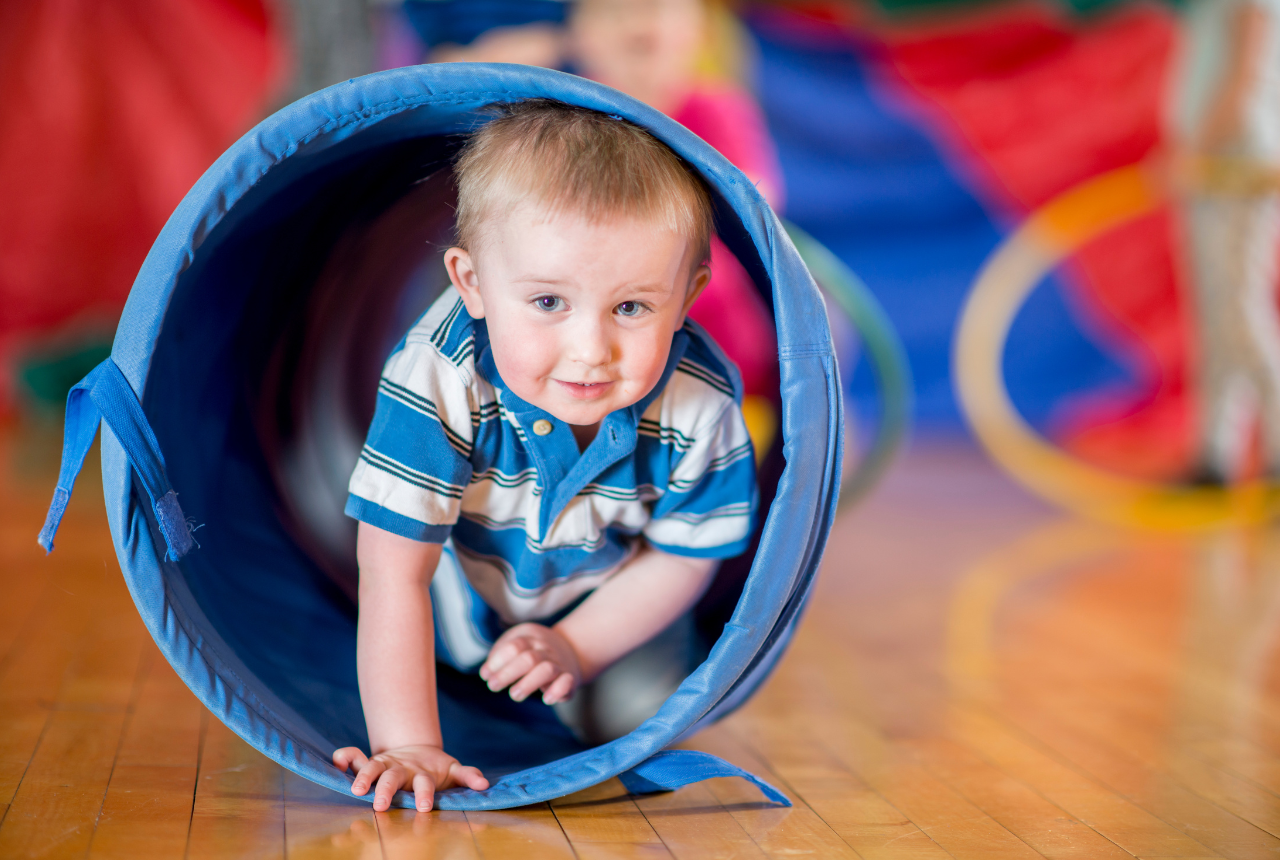
Strategy 3: Practice “Get Low and Go”
Smoke rises, so the freshest air sits close to the floor. Build a crawling tunnel from a blanket draped over chairs, or hang gray streamers across a doorway, and let children crawl underneath on hands and knees.
What to say: “Smoke floats up high, so we crawl low where the air is fresh.”
Call it the “Get Low and Go” obstacle course. Add a second round, time it for fun, and listen for the cheers of “Again!”
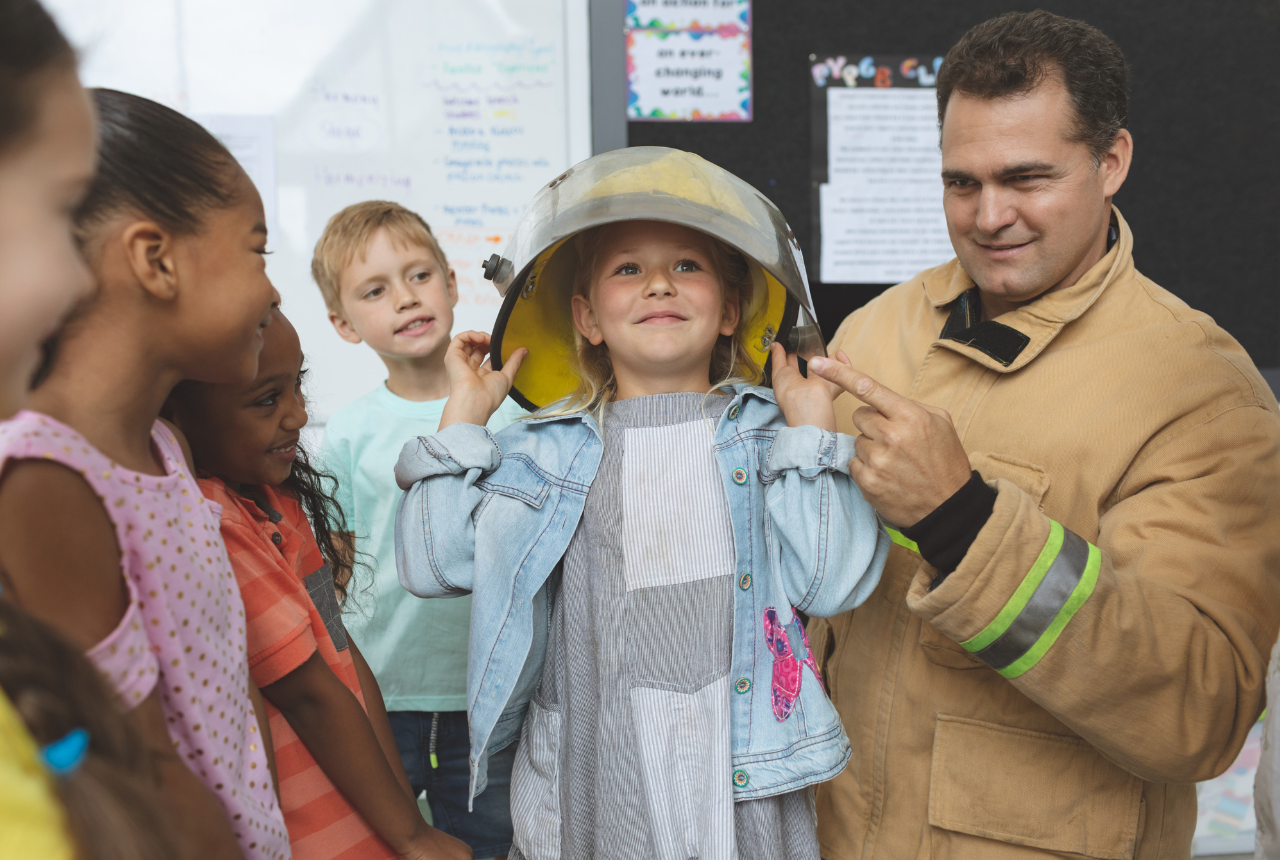
Strategy 4: Make Firefighters Friends
Here’s one many grown-ups miss. Firefighters in full gear, with masks, helmets, and loud breathing, can look frightening to a young child, and some little ones hide from the very helpers who came to rescue them.
Help children get to know that look ahead of time. Share photos of firefighters in gear, try on dress-up helmets and coats, and practice “breathing like a firefighter.” If your local station offers visits, October is a perfect time to go.
What to say: “Firefighters are helpers. If you see one, go to them.”
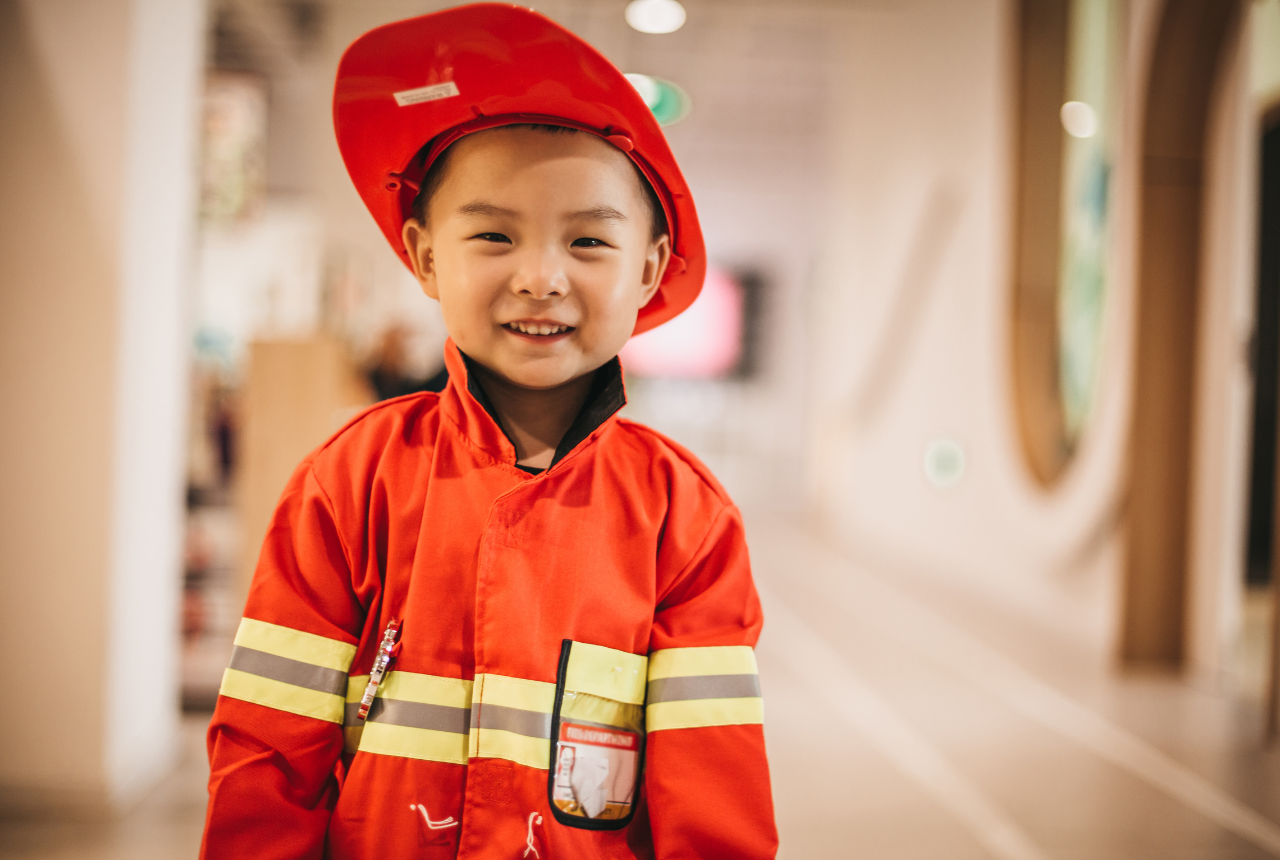
Strategy 5: Role-Play the Big Moments
Pretend play lets children rehearse brave actions in a low-stakes way. Build a fire truck from a cardboard box, and use a toy phone to practice saying their full name and how to call 911 from a safe spot outside.
Talk about hot things in the kitchen, and add one simple rule.
What to say: “Matches and lighters are grown-up tools. If you find one, tell a grown-up.”
Picture books about firefighters and community helpers make a lovely wind-down after a busy practice session.

Keeping It Calm: Words That Reassure
How you talk about fire matters as much as what you teach. A few gentle guidelines:
Stay matter-of-fact. Use the same steady voice you would use to explain handwashing.
Lead with the plan. Try, “Grown-ups have a plan to keep you safe, and now you know the plan too.”
Answer questions simply. Share just enough to satisfy curiosity, then return to what they can do.
End on a high note. Close every practice with a cheer, a sticker, or a silly dance.
Follow their lead. If a child seems worried, slow down, offer a hug, and try again another day.
Why This Matters Right Now
Fire Prevention Week runs October 4 to 10 this year, and communities everywhere turn their attention to safety. Fire stations open their doors, libraries feature firefighter books, and children see safety messages all around them. NFPA’s 2026 theme, “Charge into Fire Safety: Safe Charging Is a Superpower,” even comes with kid-friendly messaging, so the conversation is already in the air.
Every drill also strengthens listening skills, the ability to follow multi-step directions, and the know-how to ask a trusted grown-up for help. It turns an ordinary week into an exciting experience the children in your life will want to repeat.
Years from now, the children in your life will remember the giggles in the blanket tunnel, the Mighty Maple, and the grown-ups who made them feel safe.
Your Quick-Scan Fire Safety Cheat Sheet
🚦 Beep and Go: practice walking out when the alarm sounds, and meet at your outdoor spot.
✋ Stop, Drop, and Roll: play it like freeze dance with a short, calm explanation.
🐢 Get Low and Go: crawl through a blanket tunnel where the air is fresh.
👩🚒 Firefighters are helpers: share photos, try on helmets, and visit a station if you can.
🎭 Pretend play: practice a full name, a toy phone call from a safe spot outside, and the matches rule.
💬 Calm words: stay matter-of-fact, lead with the plan, and end every practice on a high note.
Ready to Make Safety Fun?
A few minutes of play, a clear plan, and plenty of encouragement go a long way. Every try builds the skill, and every giggle builds the memory.
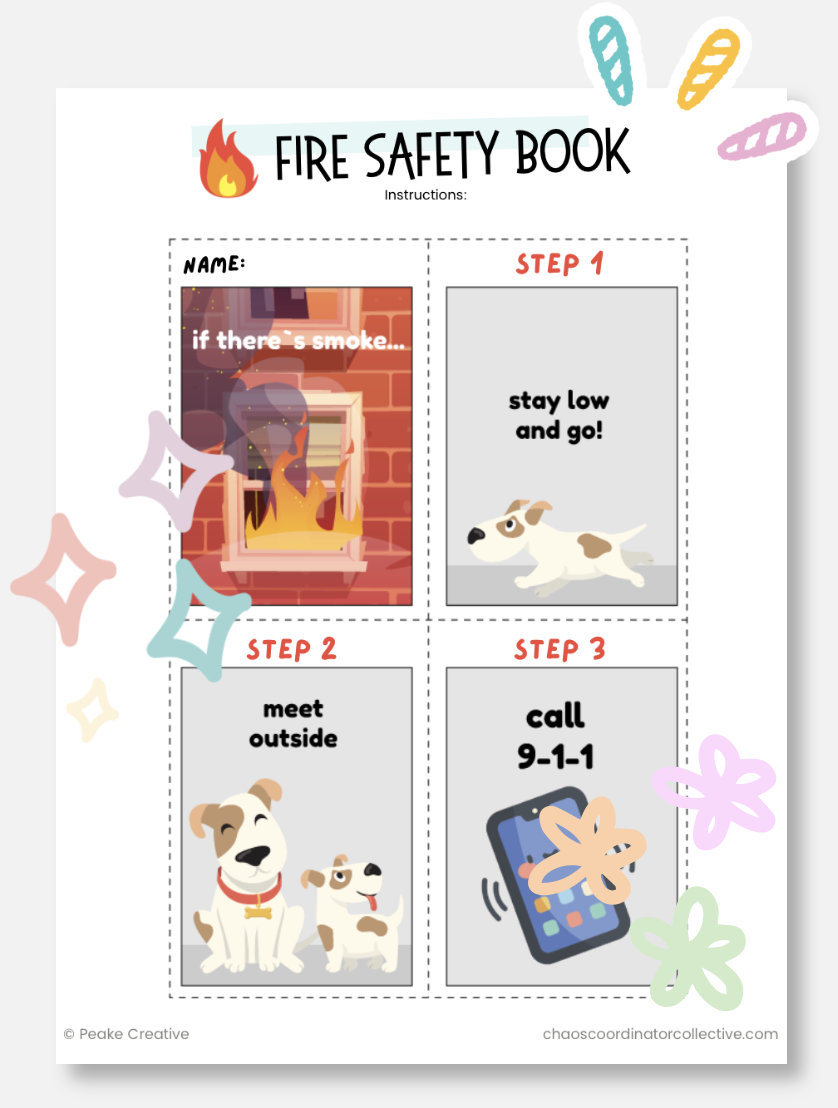
To keep the practice going, grab our free My Fire Safety Book for the little ones in your life. Fill out the form below to subscribe and instantly receive your free download.
🧡 Want done-for-you seasonal activities like these every month? The Preschool-At-Home Membership delivers a monthly curriculum plan, seasonal activities, memory-making activities, and a supportive community, all for just $17/month. Join here: http://chaoscoordinatorcollective.com/pres-at-home
Thank you for reading this content. And if you loved this post, please be sure to join our Preschool Advisor Facebook group where we share more insights and community.
Thank you for reading this content. And if you loved this post, please be sure to join our Preschool Advisor Facebook group. It’s a growing community of parents and preschool teachers where you can learn and share more parenting tips.
Visit our Preschool Advisor and The Buzz Blogs to learn more about related topics and parenting tips.
