
Back-to-School Ready: 6 Steps to Build a Preschool Schedule That Works for Your Family
The backpacks are by the door. The lunchboxes are labeled. And somewhere between the first-day photos and the third meltdown of the week, you're left wondering how everyone else seems to have a schedule that just works, while yours falls apart by Tuesday.
Building a preschool routine that actually holds up under real life, with real snack demands and real nap negotiations, can feel like one more thing on a to-do list that's already full. You want your child's days to feel steady and full of good moments. You don't want to spend your evenings redrawing a schedule that never survives contact with an actual four-year-old.
Here's the good news. You don’t need to fill every hour to have a schedule that works. It's about anchoring the day around a few things that matter, and letting the rest flex.
Why This Approach Works
After 30 years in early childhood education, including building curriculum for programs that reached families across the US and Europe, one truth holds steady across every age group and every household: children thrive on predictable rhythm, not rigid timing. The families who feel calmest at home are the ones with a rhythm their child can feel coming.
These six steps come straight from what works in real preschool classrooms, adapted for the pace of home life.
6 Steps to a Preschool Schedule That Actually Sticks

1. Anchor the day around three or four fixed points
Skip the hour-by-hour grid. Instead, pick three or four non-negotiable anchors, like breakfast, outdoor time, lunch, and rest, and build everything else around them. A preschooler who knows lunch always follows outside time settles into the rhythm faster than one tracking a clock.
2. Build in transition buffers
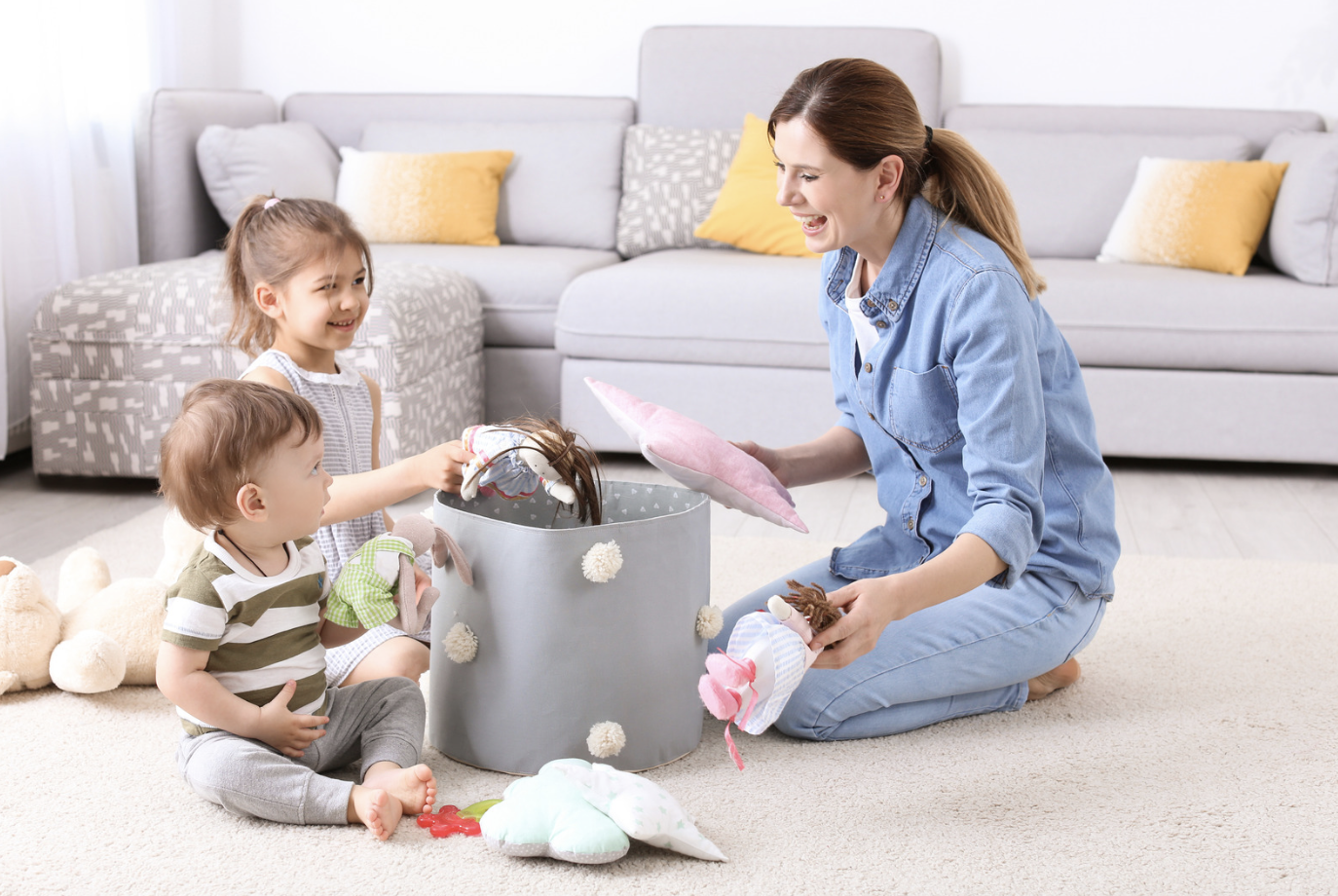
Give five to ten quiet minutes between activities. A short song, a stretch, or a simple cleanup routine signals to your child that one thing is ending and another is beginning. Skipping this step is often what turns a smooth morning into a battle.

3. Balance structured learning with open play
Pair one focused activity, like a puzzle or a letter game, with a longer stretch of open-ended play. Structured time builds skills. Open play builds imagination and gives little bodies room to move. Both belong in the day.

4. Protect a connection window
Block off one predictable pocket of one-on-one time, even 15 minutes, where the to-do list waits and your full attention doesn't. Reading together after lunch or chatting during a snack works well. This is often the part of the schedule children remember most.

5. Make it visual
A picture schedule your child can see and point to builds independence fast. When your child can check what's next without asking you, transitions get easier and your mornings get quieter.
6. Build in flexibility for off days
Every schedule needs a plan for the day nobody napped and everybody's tired. Decide in advance which activities are droppable and which stay. Knowing your own fallback plan ahead of time keeps an off day from turning into an off week.
Why This Matters Right Now
Fall is when routines either take root or unravel. The new school year brings new wake times, new drop-offs, and a fresh set of expectations for your child to navigate. A schedule that flexes with your family, instead of fighting it, is what carries you from the chaos of week one into a rhythm that holds through October and beyond.
Every week you wait to build that rhythm is a week your child spends guessing at what comes next. Starting now means fall settles faster, for both of you.
You've Got This
A great preschool schedule isn't about perfection. It's about giving your child (and yourself) a rhythm steady enough to lean on, with room to breathe when life doesn't cooperate. Start with one anchor point this week. Add the next step when it feels ready, not before.
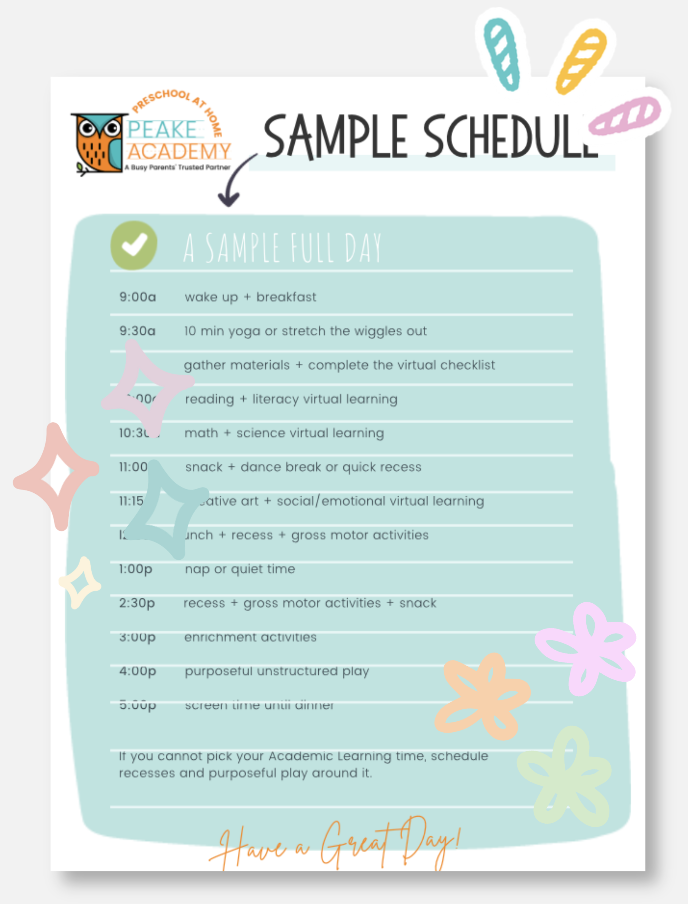
Grab the Sample Preschool Schedule + Routine Template below to put these six steps into action today.
Thank you for reading this content. And if you loved this post, please be sure to join our Preschool Advisor Facebook group where we share more insights and community.
Thank you for reading this content. And if you loved this post, please be sure to join our Preschool Advisor Facebook group. It’s a growing community of parents and preschool teachers where you can learn and share more parenting tips.
Visit our Preschool Advisor and The Buzz Blogs to learn more about related topics and parenting tips.
